
Posts

The employees of Greenbone are currently developing a completely new scanner for version comparisons. The new vulnerability scanner “Notus” should significantly accelerate the comparison of software versions, CVEs and patches in the future.
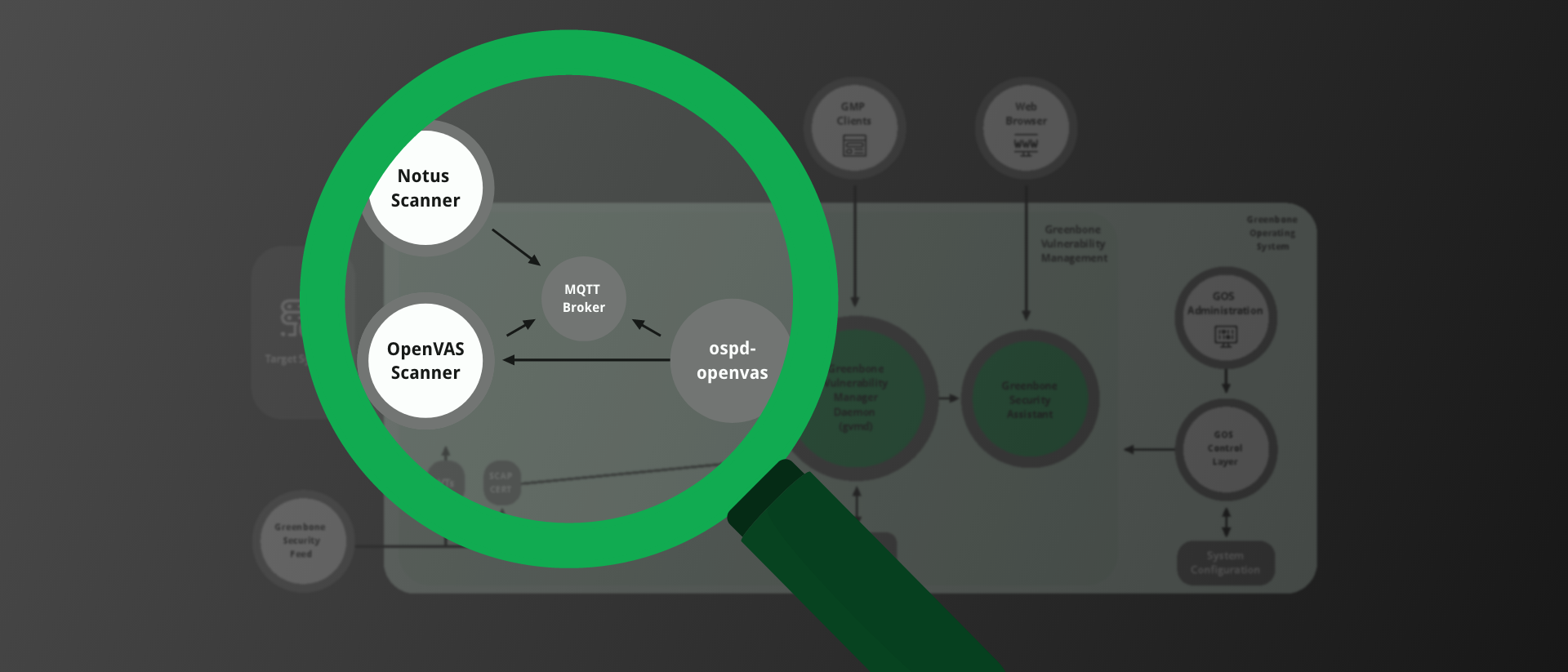
Scanner architecture of the new vulnerability scanner

A large part of modern vulnerability management consists of comparing software versions. If you want to find out whether your server is immune to a vulnerability, you need to know which version of a particular software is running on that machine. For example, version 1 may be affected by a vulnerability that is already fixed in version 2. Whether vulnerability scanners like the new vulnerability scanner “Notus” issue a warning depends, among other things, heavily on the result of these comparisons.

Björn Ricks, Unit Lead Services & Platforms at Greenbone explains, “Such tasks alone accounted for more than a third of a scanner’s work, and the scanner we have optimized specifically for version comparisons is designed to speed this up significantly.”

Performance Shortcomings of Classic Scanners

At the beginning of the work of a classic scanner is an advisory with a gap found by experts. Greenbone employees then search for matching (affected) software versions and those that have already corrected the error. This information must now be made available to the scanner.

“It then rattles off the relevant servers and records software running there. For the actual scan, it essentially only gets the info about affected and fixed packages,” Ricks explains. “With the OpenVAS scanner and its predecessors, we usually had to start a separate process per version check, meaning a separate manually created script. Generating these scripts automatically is costly.”

JSON Data Helps Speed up the Scanner

The new scanner, on the other hand, only loads the data it needs from files in JSON format, an easy-to-read plain-text standard. “This means the logic for the tests is no longer in the scripts. This has many advantages: fewer processes, less overhead, less memory required.” Ricks believes the approach is “significantly more efficient.”

Elmar Geese, COO of Greenbone Networks explains, “Our new Notus scanner will be a milestone for our users, it will significantly improve performance. Our well-known high detection quality as well as performance are key goals of our product strategy, and the new scanner supports this in an optimal way.”

The “Notus” project consists of two parts: a “Notus” generator, which creates the JSON files containing information about vulnerable RPM/Debian packages, and the “Notus” scanner, which loads these JSON files and interprets the information from them. Greenbone plans to complete the new vulnerability scanner “Notus” in the next few months.

About Greenbone and OpenVAS

When the development team of the vulnerability scanner Nessus decided to stop working under open source licenses and switch to a proprietary business model in 2005, several forks of Nessus were created. Only one of them is still active: the Open Vulnerability Assessment System (OpenVAS).

The founding of Greenbone in 2008 aimed to drive the development of OpenVAS and provide users with professional vulnerability scanning support. Greenbone started to lead the further development of OpenVAS, added several software components and thus transformed OpenVAS into a comprehensive vulnerability management solution that still carries the values of free software. The first appliances hit the market in spring 2010.

The goal of vulnerability management is to detect all security gaps in an IT network before an attacker does so. The Greenbone Security Feed (GSF) provides the vulnerability tests (VTs) that the scanner of the Greenbone solutions performs for this purpose. As a component of the Greenbone Security Manager (GSM) and the Greenbone Cloud Services (GCS), it is updated daily and provides protection against major and well-known vulnerabilities such as SUPERNOVA, BlueKeep and PrintNightmare.
We are happy to announce that the success story is growing steadily and that since this month our Greenbone Security Feed contains more than 100,000 vulnerability tests!

Let’s take a look at the history of the feed.

In 2005, the development of the Nessus vulnerability scanner decided to stop working under open source licenses and switch to a proprietary business model. By that time, members from Intevation and DN-Systems – the two companies that would later found Greenbone Networks – were already contributing developments to Nessus. In 2006, several forks of Nessus were created in response to the discontinuation of the open source solution. Of these forks, only one remains active: OpenVAS, the Open Vulnerability Assessment System.

In late 2008, Greenbone was formed to push OpenVAS. In the same year, two other companies became active: Secpod from India and Security Space from Canada. Both focused on providing vulnerability testing and partnered with Greenbone to create a reliable and up-to-date feed of vulnerability tests.

This started with the removal of source code and vulnerability tests where the license was unclear or incompatible. Several thousand vulnerability tests were eliminated to get a clean baseline with just under 3000 vulnerability tests at the time.

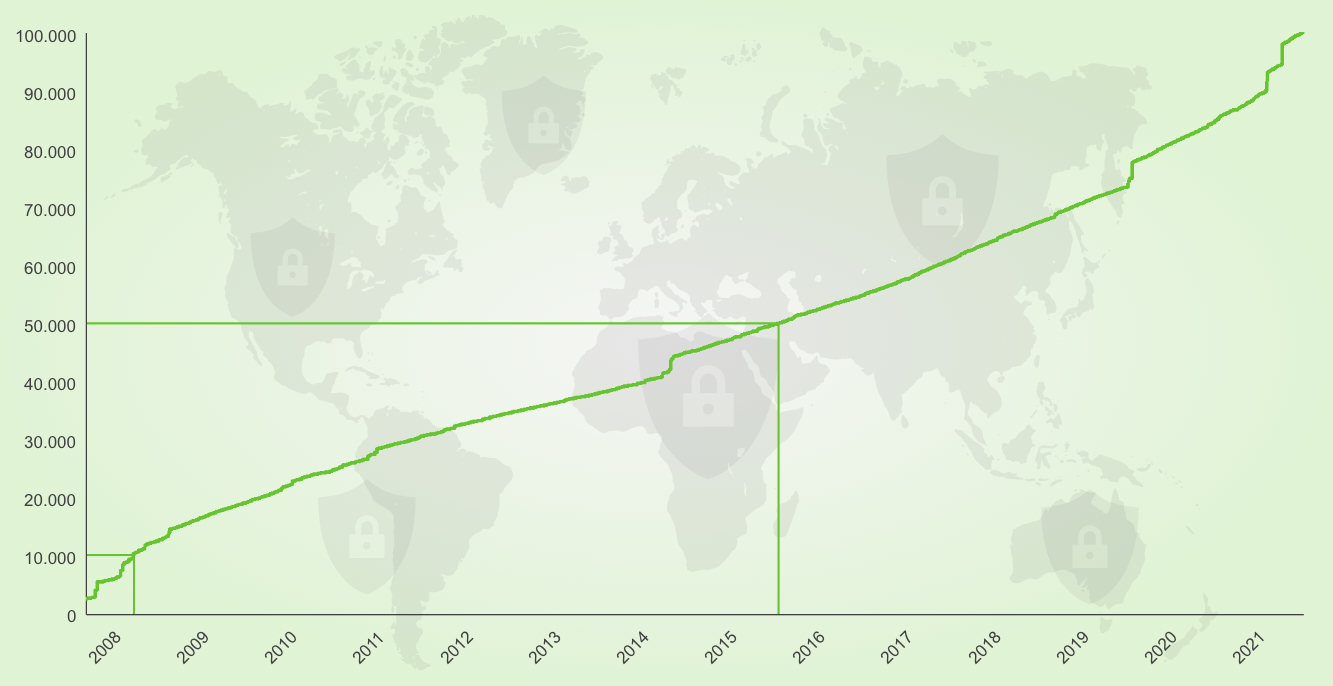
Shortly after, the content of the feed grew rapidly and steadily to over 10,000 vulnerability tests. 50,000 tests were then contained in the feed after about 8 years of development in 2016. The next 50,000 followed after only 5 more years and represent the current state with more than 100,000 vulnerability tests.

Number of vulnerability tests over time up to more than 100,000 vulnerability tests

Number of VTs over time

How Is the Feed Composed Anyway?

It is also interesting to see how these 100,000 vulnerability tests in the feed are put together. In our SecInfo Portal, you can easily take a look at all the included tests yourself.

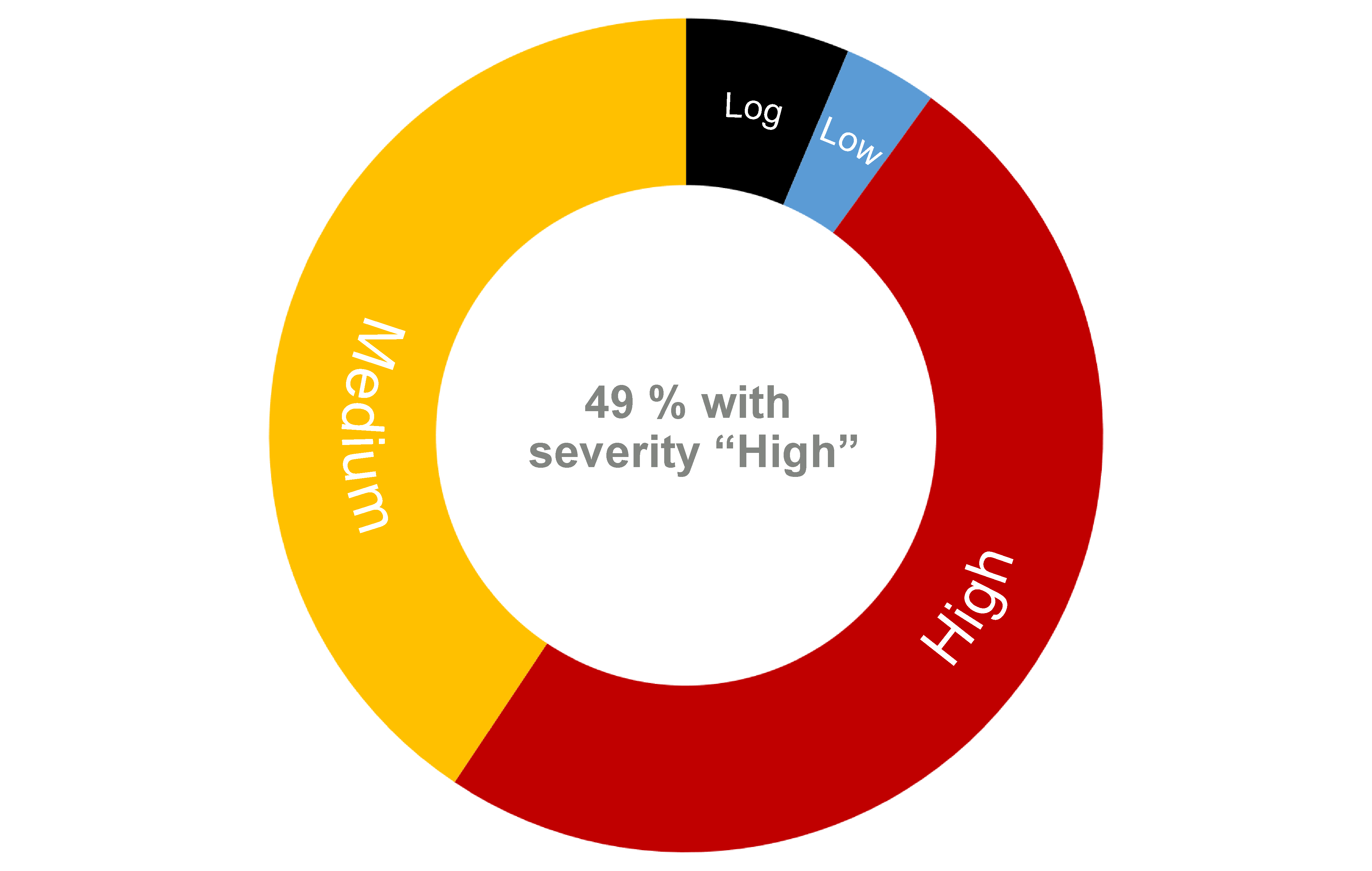
About half of the tests detect vulnerabilities with a high severity class – i.e., with a severity between 7.0 and 10.0. Another 40,000 tests such with the severity class “Medium” (severity 4.0 to 6.9).

Distribution of the more than 100,000 vulnerability tests among the severity classes

Distribution of VTs by severity class

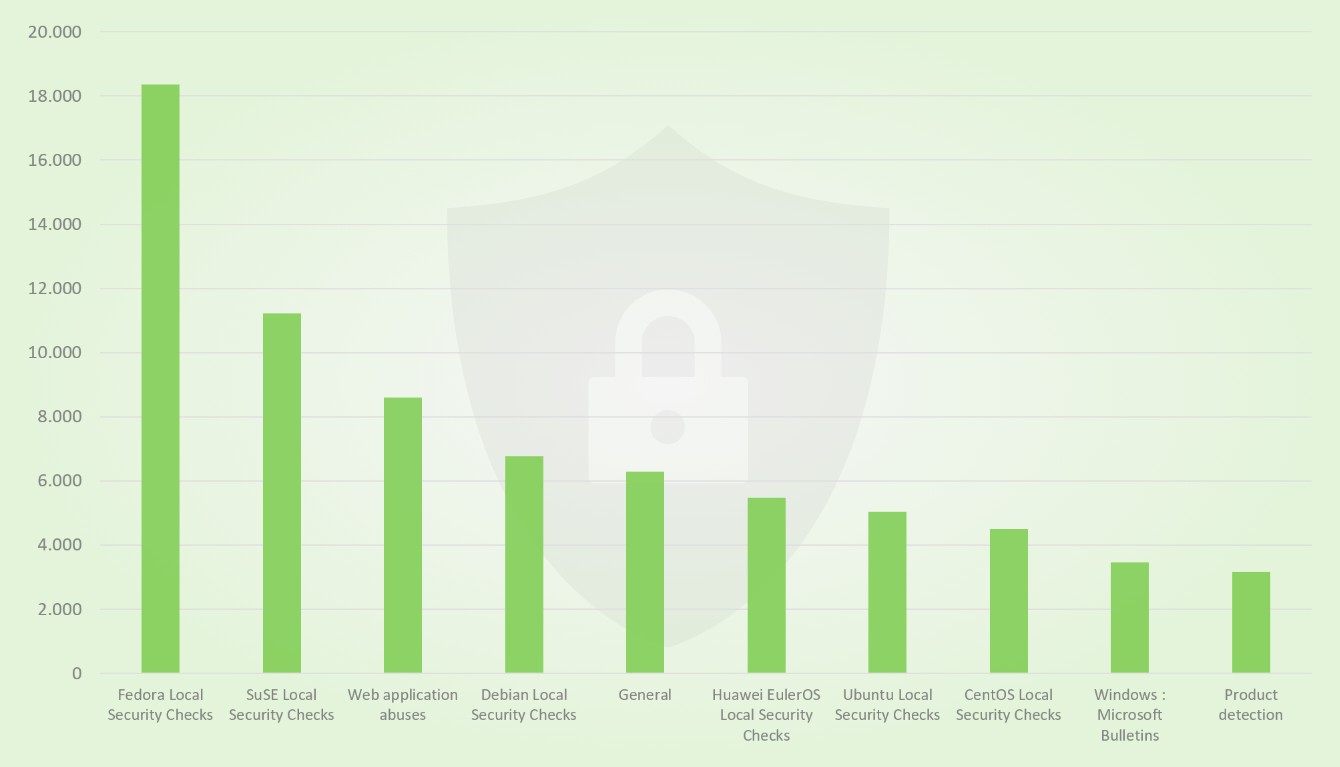
Vulnerabilities for the same area are grouped into families. Among the largest families of vulnerability tests are mainly those for local security checks, i.e., authenticated scans. In these, the target is scanned both from the outside via the network and from the inside using a valid usage login. Thus, more details about vulnerabilities can be found on the scanned system. Vulnerability tests for such authenticated scans already account for over 60,000 tests. The largest VT families with a total of almost 30,000 vulnerability tests are “Fedora Local Security Checks” and “SuSE Local Security Checks”.

Number of vulnerability tests of the top 10 families of vulnerability tests

Number of VTs in the top 10 VT Families

Globally Known Vulnerabilities Are also Covered

The general public is unaware of many vulnerabilities. But every now and then, particularly significant and spectacular cyber attacks make it into the media – especially when many large companies or governments are affected.

Greenbone reacts immediately when such incidents become known and starts developing a corresponding vulnerability test. Such notable vulnerabilities in recent years include Heartbleed (2014), POODLE (2014), DROWN (2016), Meltdown (2018), Spectre (2018), BlueKeep (2019) and PrintNightmare (2021). Most people probably also particularly remember the Solarwinds attack in 2019 and 2020. The attackers had exploited a previously unknown vulnerability to inject the malicious webshell “SUPERNOVA”.
All of these vulnerabilities can be detected via tests in the Greenbone Security Feed.

In the future, we will continue to work on expanding the scope of our feed to provide users with the opportunity to detect vulnerabilities at an early stage and not give attacks a chance. So with our solutions constantly updated to cover the latest and most critical vulnerabilities, you can relax. The next 100,000 vulnerability tests will follow – stay tuned!